The countdown to DRS has started. Here's where things stand today and what retailers, brands and consumers should be paying attention to ahead of the October 2027 launch.
With just 12 months to go until the UK Deposit Return Scheme (DRS) becomes operational, Exchange for Change (E4C) has begun moving from high-level policy discussions to practical implementation.
Over the last few months, a number of important announcements have provided greater clarity for retailers, producers and Reverse Vending Machine (RVM) operators. While some questions remain, the overall direction is now much clearer: businesses should be preparing now.
Greater Support for Retailers
One of the most significant recent developments has been the confirmation of a support package for retailers.
Exchange for Change has expanded the criteria under which retailers can apply for an exemption from acting as a return point. While stores with a sales area below 100m² remain automatically exempt, eligibility has now been widened to include:
- Urban stores between 100m² and 199m²
- Rural stores below 200m²
- Sites affected by listed building or heritage restrictions
- Locations with limited access, space or utilities
- Stores located close to alternative return points
This provides additional flexibility for smaller retailers while maintaining a comprehensive national return network.
£60 Million Available for RVM Installation
To help independent retailers participate in the scheme, E4C has also announced a £60 million grant fund.
Eligible stores will be able to receive:
- £6,000 per site
- Paid over three years
- £2,000 per year following installation of an approved RVM
This funding is designed to reduce the cost of entry for smaller retailers and accelerate the rollout of return infrastructure ahead of launch.
For retailers who have been waiting for financial clarity before committing to an RVM, this represents a major step forward.
Return Handling Fees Now Confirmed
Exchange for Change has also confirmed the Return Handling Fee (RHF) structure, giving retailers a clearer understanding of the revenue available for managing returned containers.
Current fee levels are:
- Manual return points: 3p per container
- Automated return points: 5p per container up to 225,000 containers per year
- Automated return points: 1.3p per container above 225,000 annual returns
These payments are intended to compensate retailers for the operational costs associated with collecting and returning containers through the DRS.
Barcodes: A Major Change for Producers
Perhaps one of the most important operational updates relates to product barcodes.
Exchange for Change has confirmed that all in-scope drinks containers must carry registered DRS-compliant barcodes and that existing barcodes will need to be updated and registered with the scheme.
This requirement applies to:
- UK-specific barcodes
- International barcodes used across multiple markets
The objectives are clear:
- Improve product traceability throughout the supply chain
- Prevent fraud associated with non-deposit-bearing containers being returned for refunds
For producers and brand owners, barcode implementation is now becoming a critical workstream that cannot be delayed.
Taking DRS from Theory to Reality
This summer also saw a public-facing DRS pilot at the Wimbledon Championships, delivered in partnership with Evian and The All England Lawn Tennis Club.
While small in scale compared to the national rollout, initiatives like this are important because they allow consumers to experience the return process before the full scheme launches.
It is another sign that DRS is moving beyond consultation and planning into practical implementation.
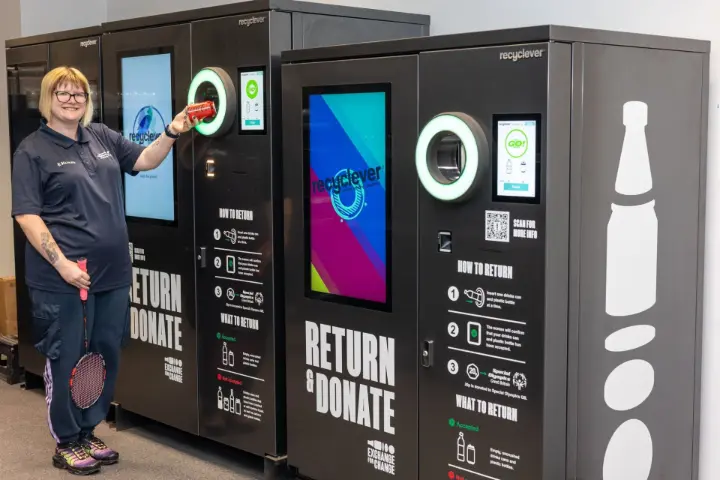
What Should Retailers Be Doing Now?
With one year remaining until launch, the focus should be shifting from "if" to "how".
Retailers should now be considering:
- Whether they are obligated to operate a return point
- Whether an exemption may apply
- Which return method is most suitable for their location
- Whether they qualify for grant funding
- The space, power and operational requirements of an RVM solution
- How DRS can be used to increase customer footfall and in-store engagement
Looking Ahead
The UK's Deposit Return Scheme represents one of the biggest changes to drinks container recycling in decades. While there is still work to do across the supply chain, recent announcements from Exchange for Change provide welcome certainty around retailer obligations, funding support and operational requirements.
At Recyclever, we continue to work closely with retailers, brands and scheme stakeholders to ensure businesses are ready for the transition.
The next 12 months will move quickly. Those who start planning now will be best positioned to maximise the opportunities that DRS can bring.